
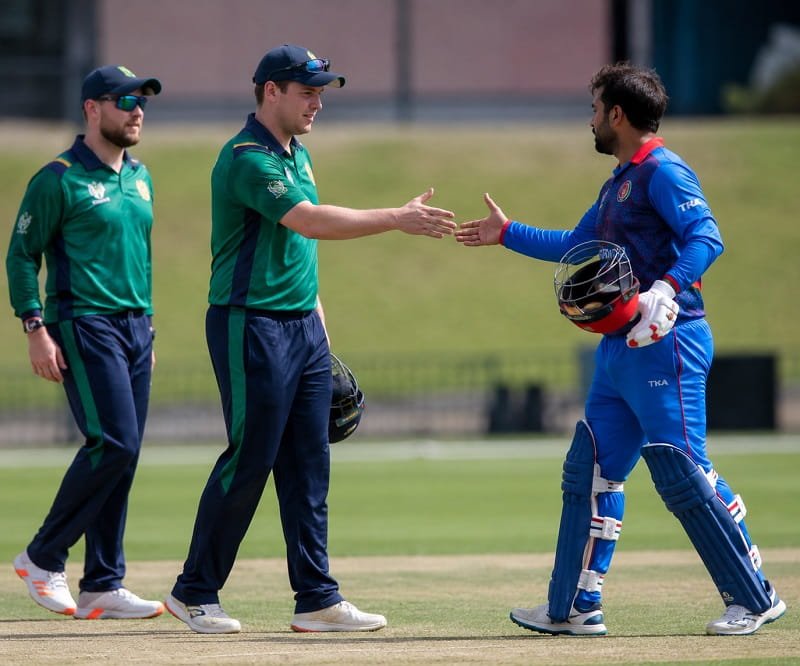

Ireland and Afghanistan are set to begin a historic five-match One Day International (ODI) series starting August 5, 2026, at Bready Cricket Club in Northern Ireland. Both teams are navigating new leadership transitions and face critical ICC Men’s Cricket World Cup 2027 qualification battles. This series represents a pivotal moment for both nations as they develop their ODI squads and test new tactical directions under fresh coaching regimes.
The matchup carries significant weight for both teams’ championship aspirations. Ireland has momentum from a stunning 2-0 T20I series victory over India, a historic result that has energized the squad. However, their ODI form shows inconsistency — they have played limited 50-over cricket in recent months and are looking to rebuild. Afghanistan, meanwhile, has established itself as a competitive ODI force in recent years but recently ended a strong run with series losses to India. Understanding the dynamics of this series requires examining team composition, recent form, key player matchups, and historical head-to-head records.
This comprehensive guide walks through everything cricket fans need to know about Ireland versus Afghanistan in the upcoming tour.
Ireland Team Overview and Recent Form
Ireland enters the series under the leadership of captain Paul Stirling and new head coach Gary Wilson, the legendary former Irish cricketer who is stepping into the role as a short-term consultant. Stirling brings stability and experience to the captaincy, having led the team through numerous challenges in ODI cricket. The appointment of Wilson as coach signals Ireland’s intent to modernize their ODI setup and build toward World Cup qualification with proven tactical knowledge.
The team’s recent record shows inconsistency, with their last five completed ODIs revealing a mixed pattern: Loss, Win, Loss, Win, Loss. Despite the uneven results, Ireland’s T20I victory over India has injected confidence into the squad. That achievement demonstrates the team’s ability to compete at the highest level when conditions align and momentum builds. However, the 15-month gap since their previous ODI series presents a challenge — lack of match practice in the longer format requires quick adjustment.
Key players in the Irish squad include Harry Tector, an in-form top-order batter who has been pacing his innings effectively in the 50-over format, and Jai Moondra, a left-arm seamer making his ODI debut after an outstanding Player-of-the-Series performance in the T20Is against India. The absence of several regular fast bowlers — Josh Little, Craig Young, and Barry McCarthy are all unavailable due to injury — means Ireland must field a development-focused bowling lineup. Andrew McBrine and George Dockrell provide experience in the middle order and with spin bowling, essential for adapting to Irish conditions.
Ireland’s probable squad includes Mark Adair, Andrew Balbirnie, Ben Calitz, Curtis Campher, Cade Carmichael, George Dockrell, Gavin Hoey, Andrew McBrine, Liam McCarthy, Byron McDonough, Lorcan Tucker, and other supporting players. The team is currently ranked 12th in ICC Men’s ODI Team Rankings with a rating of 54. Their strategy revolves around capitalizing on familiar home conditions while integrating youth and developing match-winners across the batting and bowling units.
Afghanistan Team Overview and Leadership Change
Afghanistan arrives in Ireland under new captain Rahmat Shah and new head coach Richard Pybus, both appointments representing significant transitions for the team. Rahmat Shah takes over the captaincy from Hashmatullah Shahidi and brings valuable experience as Afghanistan’s leading run-getter in ODI cricket. He must balance the dual demands of scoring runs and providing leadership — a challenge that defines his tenure. Pybus, brought in after Thomas Trott’s departure, brings tactical expertise gained through coaching experience at international level.
Afghanistan has built a strong ODI reputation since March 2024, during which they achieved a stellar run of results. However, that streak was ended by India earlier this year, signaling that even strong teams face setbacks in international cricket. Most recently, Afghanistan defeated Ireland 2-0 in a five-match ODI series played in Sharjah in 2024, demonstrating their edge in the head-to-head record. The team has increasingly looked the more accomplished ODI side, and they carry that confidence into the current tour.
The Afghan squad is built around destructive batter Rahmanullah Gurbaz, who has been one of the most explosive batters in white-ball cricket and brings both form and match time from T20 cricket. Gurbaz remains Afghanistan’s most destructive opening batter and can pace his innings exceptionally well in the ODI format. Rashid Khan, Afghanistan’s captain in other formats and a world-class leg spinner, serves as the backbone of Afghanistan’s bowling attack. His variations and match awareness make him a critical player for controlling the game flow.
The Afghan squad also includes Ibrahim Zadran, Sediqullah Atal, Hashmatullah Shahidi, Darwish Rasooli, Azmatullah Omarzai, and Ikram Alikhil as wicketkeeper. Their strategy emphasizes building on their established ODI success and using this series to fine-tune combinations ahead of World Cup qualification matches. Afghanistan’s depth in batting and bowling gives them confidence against any opponent.
Head-to-Head Record and Series History
The historical record between Ireland and Afghanistan in ODI cricket shows Afghanistan’s growing competitive edge. In their most recent five-match ODI series in Sharjah in 2024, Afghanistan won 2-0, demonstrating superior performance in the longer format. This outcome reflects Afghanistan’s emergence as an accomplished ODI team with specific strengths in controlling the middle overs and capitalizing on powerplay aggression.
Prior to that series, Ireland and Afghanistan met in the United Arab Emirates in December 2017 in a three-match ODI series as preparation for the 2018 Cricket World Cup Qualifier. Ireland won that series 2-1, with Paul Stirling named Player of the Series. That result marked an earlier period when Ireland had competitive advantage, but the subsequent evolution of both teams — particularly Afghanistan’s rapid development under coaching and strategic investment — has shifted the balance.
The overall head-to-head record reflects Afghanistan’s recent ascendancy. Afghanistan’s consistent performance in ODI cricket since 2024 has made them increasingly difficult to counter for most opponents. The team’s combination of aggressive batting, economical bowling, and tactical discipline has become a hallmark of Afghan cricket under their coaching structure.
Key Player Matchups to Watch
The series features several compelling individual battles that will shape outcomes. Rahmanullah Gurbaz’s explosive batting against Jai Moondra’s seaming attack represents a clash between destructive opening batting and new-ball control. Gurbaz’s ability to pace powerplay aggression while maintaining shot selection will be tested by Moondra’s pace and movement in Irish conditions.
Rashid Khan versus Ireland’s batting lineup — particularly Harry Tector and Andrew Balbirnie — will determine how Afghanistan manages the middle overs. Khan’s variations and experience against different batters give him an edge in this matchup. His ability to build pressure and create breakthroughs at critical junctures has been central to Afghanistan’s success.
Paul Stirling’s captaincy and batting form against Afghanistan’s bowling attack will influence Ireland’s overall series performance. Stirling must set the tone early while managing the learning curve of new team members like Moondra. His accumulation rate and shot selection in the powerplay and middle overs will signal Ireland’s confidence and tactical intent.
Afghanistan’s top-three batting versus Ireland’s fast bowlers — particularly Mark Adair, if available, alongside young talent like Moondra — will determine whether Afghanistan can build substantial innings. If Ireland’s bowling can restrict Afghanistan’s openers early, they create opportunities to exploit the middle order and apply pressure.
Current Form and Momentum
Ireland’s advantage heading into the series is clear momentum from their T20I success over India. That achievement has energized the entire squad and demonstrated they can compete against and beat the world’s strongest teams. However, that momentum carries a different energy in ODI cricket, where the longer format requires sustained discipline and building partnerships over 50 overs rather than explosive bursts in 20.
Afghanistan’s recent form shows ups and downs. Their stellar run from March 2024 was interrupted by losses to India, but they maintain confidence based on their 2-0 victory over Ireland just 18 months ago. That recent success in the head-to-head provides psychological advantage heading into this series. Afghanistan’s consistency in recent ODI cycles also suggests they have better rhythm and match exposure in the format.
Why This Series Matters for World Cup 2027
Both teams are acutely aware that ODI performances directly impact ICC Men’s Cricket World Cup 2027 qualification pathways. For Ireland, this series against a top-ranked opponent provides crucial rating points and allows them to test their squad composition before critical qualifying matches. A strong performance here builds confidence for the qualification journey ahead and demonstrates to selection committees that their development strategy is working.
For Afghanistan, this series allows them to maintain their ODI ranking while testing new leadership under Rahmat Shah and Richard Pybus. A positive result reinforces Afghanistan’s position as a credible World Cup participant and justifies their recent squad changes. Both teams view this series as essential preparation for the qualification gauntlet they face over the coming months.
Frequently Asked Questions About Ireland vs Afghanistan
When does the Ireland vs Afghanistan ODI series start?
The five-match ODI series begins on August 5, 2026, with the first match at Bready Cricket Club in Northern Ireland. Subsequent matches follow at venues to be confirmed across the Irish cricket circuit. The series represents Afghanistan’s first tour of Ireland for ODI cricket and carries significant importance for both nations’ World Cup qualification efforts.
Who is the current captain of Ireland and Afghanistan?
Paul Stirling leads Ireland as captain, bringing experience and steady leadership to the team. Rahmat Shah captains Afghanistan, taking over from Hashmatullah Shahidi. Both captains face the dual challenge of managing new coaching regimes while delivering results in a competitive series.
How many ODIs has Ireland played against Afghanistan?
Ireland and Afghanistan have met in multiple ODI series, most recently in a five-match series in Sharjah in 2024 where Afghanistan won 2-0. Prior to that, they met in the UAE in December 2017 in a three-match series where Ireland won 2-1. The head-to-head record has evolved as Afghanistan developed into a stronger ODI team.
Which team is ranked higher in ODI cricket?
Afghanistan has established itself as the more accomplished ODI team in recent cycles, winning their most recent head-to-head series 2-0 against Ireland. However, ODI rankings fluctuate based on recent performance, and Ireland’s T20I success over India suggests they carry momentum into this series. Individual matches and series outcomes will determine final rankings after this tour concludes.
What are the key differences in playing conditions between Afghanistan and Ireland?
Ireland’s home grounds feature grass pitches that typically offer pace and bounce to fast bowlers, contrasting sharply with Afghanistan’s traditional playing venues in the UAE and South Asia where spin bowling dominates and batting conditions favor aggressive stroke-play. Ireland’s cooler climate and moisture in the air also impact ball movement, requiring Afghanistan bowlers to adapt their plans. Ireland will leverage home advantage through pitch conditions and familiar grounds.
Conclusion: What to Expect
The Ireland versus Afghanistan ODI series promises compelling cricket shaped by new leadership, World Cup qualification pressures, and contrasting playing styles. Ireland enters with recent T20I momentum and home advantage but faces a team that has proven its ODI mettle through consistent performances in recent years. Afghanistan brings confidence from their recent 2-0 victory over Ireland and enters as the form team, yet they must adapt to unfamiliar Irish conditions and execute their plans under new captaincy.
This five-match series will reveal much about both teams’ readiness for World Cup qualification. Ireland will attempt to demonstrate that their T20I excellence translates to ODI success, while Afghanistan seeks to reinforce their position as an emerging ODI powerhouse. Cricket fans should expect high-quality cricket, tactical battles between key players, and outcomes that reshape both teams’ confidence heading into their next competitive assignments.