Comprehensive History and Meteorological Analysis of Tropical Storm Gabrielle: Evolution, Impact, and Lessons in Atlantic Hurricane Preparedness
The Atlantic hurricane season is a recurring period of intense meteorological activity that demands constant vigilance from coastal communities and government agencies. Among the numerous storms that have traversed the Atlantic basin, Tropical Storm Gabrielle represents a significant case study in the complexities of storm development, erratic tracking, and the challenges of predicting intensity in a changing climate. While not always reaching the catastrophic status of a major Category 5 hurricane, storms like Gabrielle demonstrate that even “moderate” tropical systems can produce life-threatening flooding, significant coastal erosion, and widespread structural damage across multiple regions.
Understanding the lifecycle of a tropical cyclone requires a deep dive into the atmospheric conditions that fuel these massive weather systems. Tropical Storm Gabrielle, in its various historical iterations—most notably the impactful 2001 and 2007 seasons—showcased how warm sea surface temperatures, low vertical wind shear, and high moisture content in the mid-levels of the atmosphere interact to form a closed low-pressure circulation. The National Hurricane Center (NHC) and the National Oceanic and Atmospheric Administration (NOAA) utilize advanced satellite imagery, reconnaissance aircraft (Hurricane Hunters), and complex computer modeling to track these developments. However, Gabrielle’s history is often defined by its resilience against unfavorable conditions, proving that tropical systems are rarely predictable.
In the context of modern meteorology, Gabrielle serves as a reminder of the “pre-season” and “peak-season” fluctuations. The storm’s ability to undergo transitions—moving from a tropical depression to a tropical storm and sometimes into an extratropical cyclone—highlights the dynamic nature of the Atlantic’s weather patterns. For residents from the Gulf Coast of Florida to the outer banks of North Carolina and even into the Canadian Maritimes, the name Gabrielle is synonymous with heavy rainfall and the unpredictable shifts in storm trajectory that can catch unprepared populations off guard. This report provides an exhaustive analysis of the meteorological mechanics, historical precedents, and the socio-economic impacts of Tropical Storm Gabrielle.
The Genesis and Meteorological Characteristics of Gabrielle
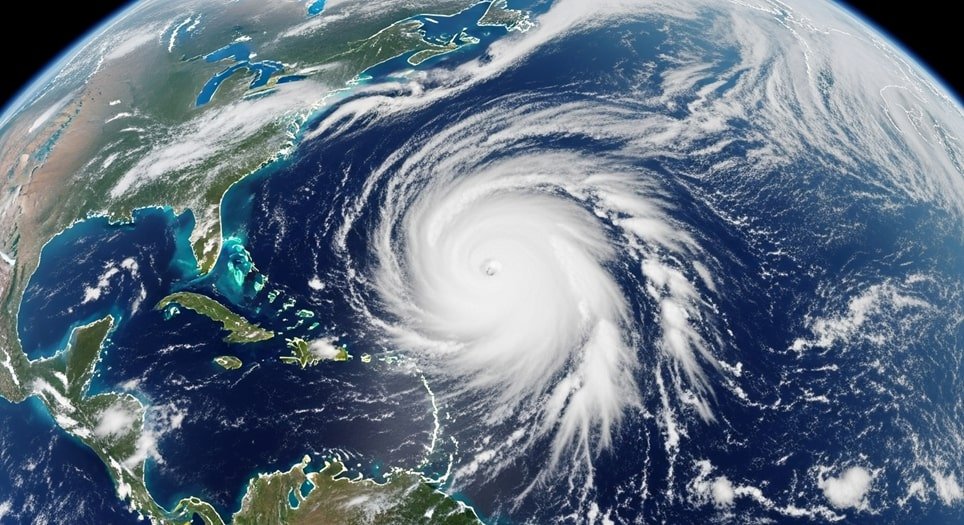
The formation of Tropical Storm Gabrielle typically begins with a tropical wave or a broad area of low pressure interacting with a stalled frontal boundary. In the 2001 iteration, which remains one of the most studied versions of this storm, Gabrielle originated from a cold front that had moved off the Southeastern United States and stalled over the Gulf of Mexico. This interaction is a common precursor for tropical cyclogenesis, as the contrast between cool air masses and the warm, latent heat of the Gulf waters creates an environment ripe for convection. As the low-pressure center becomes more defined and organized, the system transitions into a tropical depression, marked by a recognizable spiral pattern of clouds and thunderstorms.
Meteorologists focus heavily on the “vertical wind shear” when analyzing Gabrielle’s development. High shear can effectively “tilt” a storm, separating the low-level circulation from the upper-level convection and preventing intensification. Throughout its various occurrences, Gabrielle has often battled significant shear, which frequently led to an asymmetrical cloud structure where most of the rainfall was concentrated on one side of the center. Despite these hurdles, Gabrielle often maintained its strength through “baroclinic” processes—energy derived from temperature differences in the atmosphere—which allowed it to persist even when standard tropical fuel sources were limited.
The transition of the storm into a tropical storm occurs when sustained winds reach the threshold of 39 miles per hour (63 kilometers per hour). For Gabrielle, this intensification often happened rapidly once the system moved over the warm waters of the Loop Current in the Gulf or the Gulf Stream along the Atlantic coast. These warm currents act as high-octane fuel for tropical systems, providing the thermal energy necessary for the central pressure to drop and the wind speeds to increase. The storm’s structure during these phases typically included a broad wind field, meaning that the strongest winds and heaviest rains were not confined to the center but spread out over hundreds of miles, increasing the total area of impact.
Geographic Trajectory and Landfall Impact
The path of Tropical Storm Gabrielle has historically been one of the most difficult to forecast with precision. In many instances, the storm has exhibited a “re-curving” motion, where it moves toward the Florida peninsula before being pushed northeastward by a trough of low pressure moving across the United States. When Gabrielle made landfall on the western coast of Florida, specifically near Venice or the Tampa Bay area, it brought with it a storm surge that, while modest in height, caused significant coastal flooding due to the shallow bathymetry of the Gulf’s continental shelf. The slow-moving nature of the storm exacerbated these effects, as multiple tide cycles were affected by the onshore flow of water.
After crossing the Florida peninsula, Gabrielle typically emerges into the Atlantic Ocean. This transition is a critical phase for the storm’s lifecycle. While the friction of moving over land usually weakens the internal circulation, the warm waters of the Atlantic can lead to “re-intensification.” During several historical tracks, Gabrielle regained its tropical storm status or even flirted with hurricane-force winds after exiting the Florida coast. This second phase of the storm often poses a direct threat to the Carolinas. The Outer Banks, in particular, are highly vulnerable to Gabrielle’s wind and surge, as the islands sit directly in the path of storms moving along the Gulf Stream.
The impact on the Northeastern United States and Atlantic Canada should not be underestimated. As Gabrielle moves into cooler waters, it begins the process of “extratropical transition.” During this phase, the storm loses its purely tropical characteristics and takes on the structure of a powerful winter-like low-pressure system. However, this does not mean the danger has passed. Extratropical Gabrielle has historically brought torrential rains to Newfoundland and Nova Scotia, causing bridge washouts, flooding of low-level roads, and significant disruptions to the local fishing and shipping industries. The sheer geographic reach of the storm—from the tropics to the sub-arctic—demonstrates the massive scale of Atlantic weather systems.
Rainfall, Flooding, and Hydrological Consequences
One of the primary hazards associated with Tropical Storm Gabrielle is its capacity for extreme precipitation. Because Gabrielle often moves at a relatively slow forward speed, it can dump massive quantities of rain over a single area in a short period. This leads to “flash flooding,” where drainage systems and natural waterways are overwhelmed. In Florida, where the water table is high and the terrain is flat, 10 to 15 inches of rain from a single storm can lead to long-term flooding that takes weeks to recede. The hydrological impact extends to the saturation of soil, which weakens the root systems of trees and makes them more susceptible to being toppled by even modest wind gusts.
The following list highlights the primary hydrological and environmental impacts observed during the peak phases of Tropical Storm Gabrielle:
- Inland Freshwater Flooding: The accumulation of rainfall in low-lying areas often leads to the overflow of rivers and creeks. This flooding frequently cuts off essential transportation routes and requires the evacuation of residential neighborhoods situated in floodplains.
- Storm Surge and Coastal Erosion: Onshore winds push seawater onto land, causing significant erosion of beaches and dunes. This not only damages property but also destroys the natural habitats of coastal wildlife and reduces the buffer against future storms.
- Urban Drainage System Overload: In major metropolitan areas like Tampa or Jacksonville, the volume of water from Gabrielle often exceeds the capacity of engineered drainage systems. This results in “street flooding,” which can damage vehicles and the ground floors of commercial buildings.
- Agricultural Losses: Saturated fields can lead to the “drowning” of crops, particularly in Florida’s citrus and vegetable belts. Excessive moisture also promotes the growth of fungi and pests, leading to long-term economic losses for farmers.
- Contamination of Water Sources: Heavy flooding can cause sewage systems to overflow and runoff to carry pollutants into local lakes and aquifers. This poses a significant public health risk and requires intensive water quality monitoring following the storm’s passage.
Socio-Economic Impact and Infrastructure Damage
The economic toll of Tropical Storm Gabrielle is measured in hundreds of millions of dollars across various sectors. The most immediate costs are related to emergency response, including the deployment of the National Guard, search and rescue operations, and the establishment of temporary shelters. Beyond the immediate crisis, the long-term costs of infrastructure repair can linger for years. Roads, bridges, and power grids are particularly vulnerable to the combination of high winds and saturated ground. In many cases, the loss of power is the most widespread issue, affecting hundreds of thousands of residents and disrupting business operations, which leads to indirect economic losses.
Insurance industries also face significant pressure following a storm like Gabrielle. While Gabrielle may not always trigger the “catastrophic” wind clauses associated with major hurricanes, the damage caused by flooding is often a complex legal and financial issue for homeowners. In the United States, standard homeowners’ insurance typically does not cover rising water, necessitating separate policies through the National Flood Insurance Program (NFIP). The influx of claims following Gabrielle highlights the importance of flood insurance for residents in tropical-prone zones, as even a minor tropical storm can cause total property loss through water damage alone.
Furthermore, the impact on the tourism industry in regions like Florida and the Outer Banks is substantial. Cancellations of flights, hotel stays, and outdoor events lead to a sharp decline in revenue for local businesses. In the aftermath of the storm, the “perception” of damage can also deter tourists from visiting, even after the infrastructure has been repaired. This requires local governments to invest in post-storm marketing campaigns to reassure the public that the region is open for business. The resilience of these communities is tested not just by the wind and rain, but by the economic endurance required to bounce back from repeated tropical threats.
Technological Advancements in Tracking and Prediction
The ability to mitigate the damage from Tropical Storm Gabrielle is directly linked to the accuracy of meteorological forecasts. Over the decades, the tools used to monitor Gabrielle have evolved from simple shore-based observations to a sophisticated global network of sensors. Geostationary Operational Environmental Satellites (GOES) provide high-resolution imagery that allows meteorologists to observe the “center of circulation” in real-time. This data is fed into supercomputers running models such as the Global Forecast System (GFS) and the European Centre for Medium-Range Weather Forecasts (ECMWF), which predict the storm’s future path and intensity.
One of the most critical components of the forecasting process is the use of dropsondes—cylindrical instruments dropped from Hurricane Hunter aircraft directly into the storm. As the dropsonde falls, it transmits data on pressure, temperature, humidity, and wind speed back to the aircraft. This “in-situ” data is far more precise than satellite estimates and is vital for determining whether Gabrielle is strengthening or weakening. Improvements in “ensemble forecasting,” where multiple model runs are averaged to create a “cone of uncertainty,” have significantly reduced the errors in track prediction, giving coastal residents more time to prepare.
Despite these advances, predicting the intensity of Gabrielle remains a challenge. Small-scale features, such as the size of the “eye” or the presence of “hot towers” (deep convective clouds), can lead to rapid changes in strength that models sometimes fail to capture. Research into the “ocean heat content”—the amount of warm water available below the surface—is helping to improve these intensity forecasts. By understanding that a storm is not just fueled by the surface temperature but by the depth of the warm water layer, scientists can better predict if Gabrielle will maintain its strength as it crosses the Gulf Stream.
Lessons in Emergency Management and Public Safety
The legacy of Tropical Storm Gabrielle is found in the improvements made to emergency management protocols. Each occurrence of the storm has provided valuable data on how populations react to tropical threats. One of the key lessons learned is that the “category” of a storm (using the Saffir-Simpson scale) can be misleading. Because Gabrielle is often a tropical storm rather than a hurricane, some residents may underestimate the threat of flooding. Emergency managers now emphasize “hazard-based” messaging, focusing on the specific impacts—such as “life-threatening storm surge” or “extreme rainfall”—rather than just the wind speed category.
Evacuation strategies have also been refined. In the past, mass evacuations often led to massive traffic jams, as seen during more intense hurricanes. For Gabrielle, the strategy often involves “sheltering in place” for those not in flood-prone zones, while focusing evacuation efforts on coastal and low-lying areas. This targeted approach reduces the strain on the transportation network and ensures that those most at risk can reach safety quickly. The integration of social media and mobile alerts has also revolutionized how warnings are disseminated, allowing for real-time updates as the storm’s track shifts.
Community preparedness initiatives have also gained momentum. Programs like “StormReady,” sponsored by the National Weather Service, help communities develop robust communication plans and emergency operations centers. For Gabrielle, these preparations include the pre-positioning of utility crews, the clearing of drainage canals, and the fortification of public buildings. The goal is to create a culture of readiness where every household has a “disaster kit” containing food, water, medications, and copies of important documents. This grassroots level of preparation is the most effective defense against the unpredictable nature of tropical systems.
Conclusion: The Enduring Threat of Tropical Systems
Tropical Storm Gabrielle serves as a definitive example of the persistent and multifaceted threat posed by Atlantic tropical cyclones. Throughout its history, the storm has demonstrated that intensity is only one factor in a system’s destructive potential. The combination of erratic movement, extreme precipitation, and the ability to impact vast geographic areas—from the Gulf of Mexico to the Canadian Maritimes—makes Gabrielle a significant concern for meteorologists and emergency managers alike. While the storm often struggles against wind shear and land interaction, its resilience highlights the immense energy stored within the Earth’s tropical atmosphere and oceans.
The evolution of our response to Gabrielle reflects a broader shift in how society perceives and prepares for natural disasters. Through the integration of advanced satellite technology, sophisticated computer modeling, and refined public safety strategies, we have made significant strides in reducing the loss of life and property. However, the inherent unpredictability of weather systems means that vigilance can never be relaxed. As sea levels rise and ocean temperatures continue to climb, the dynamics of storms like Gabrielle may change, potentially leading to more frequent or more intense rainfall events in the future. Continuous investment in scientific research and infrastructure resilience remains the best path forward in mitigating the impacts of these powerful natural forces.
Recommended For You