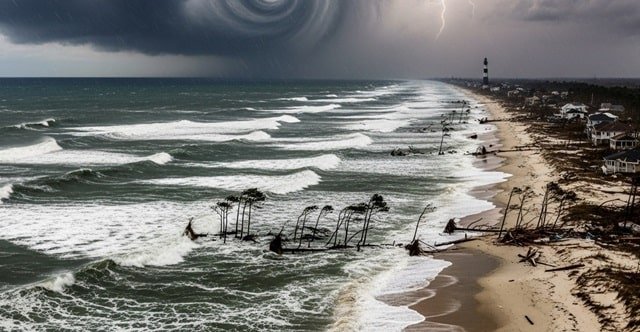
Hurricane Overwash Threats to Hatteras Island: How Storm Surge and Coastal Flooding Reshape the Outer Banks
Understanding Coastal Overwash Risks on Barrier Islands During Major Hurricanes
Barrier islands along the United States Atlantic coast exist in a constant state of change. Narrow, low-lying, and shaped by waves and currents, these islands provide a natural buffer between the open ocean and the mainland. During major hurricanes, however, that protective role can be overwhelmed by storm surge and powerful wave action. One of the most destructive processes in these events is coastal overwash, a phenomenon that can permanently reshape landscapes, damage infrastructure, and threaten human safety. Hatteras Island, part of North Carolina’s Outer Banks, has long been recognized as one of the most vulnerable locations to overwash during intense storms.
Coastal overwash occurs when storm-driven water levels and waves exceed the height of dunes or natural barriers, allowing ocean water and sand to flow across the island toward the sound side. This process does not merely flood land temporarily; it actively transports sediment, erodes protective features, and can cut new inlets. Understanding how overwash develops, why certain islands are more exposed, and what the impacts are is essential for residents, policymakers, and anyone interested in coastal resilience.
The historical record of Atlantic hurricanes demonstrates that overwash has repeatedly played a central role in shaping Hatteras Island. From early documented storms to more recent hurricanes, overwash has closed highways, destroyed homes, and altered the island’s geography. Examining this process in detail provides critical insight into how future storms may affect similar coastal communities.
The Geography and Natural Vulnerability of Hatteras Island
Hatteras Island is a classic example of a barrier island system. It is long and narrow, with elevations that rarely rise more than a few meters above sea level. These characteristics make it especially susceptible to storm surge and wave overtopping. Unlike rocky coastlines, barrier islands are composed primarily of sand, which is easily mobilized by wind and water.
The island’s position along the Atlantic hurricane corridor further increases its exposure. Storms tracking up the U.S. East Coast often pass close enough to generate dangerous surge and wave conditions, even if the eye remains offshore. The combination of low elevation, limited width, and frequent storm exposure creates an environment where overwash is not an exception but an expected process during major hurricanes.
Natural dunes are the island’s first line of defense against overwash. When these dunes are high and continuous, they can reduce the frequency and severity of overwash events. However, human development, foot traffic, and previous storms can weaken dune systems, lowering their ability to block storm-driven water.
How Hurricane-Driven Overwash Develops
Overwash during hurricanes is driven by a combination of elevated water levels and energetic waves. Storm surge raises the baseline water level, while waves ride on top of that surge, allowing them to reach farther inland. When the combined height of surge and waves exceeds dune elevation, water spills over.
This process typically begins with wave run-up eroding the seaward face of dunes. As sand is removed, dunes become lower and narrower. Eventually, breaches form, allowing continuous flow of water and sediment across the island. These overwash channels can persist long after the storm ends, altering drainage patterns and increasing vulnerability to future events.
Overwash is not uniform across an island. Low points, such as areas where dunes are naturally lower or have been previously breached, are especially prone. Infrastructure corridors like roads often follow these lower elevations, which explains why highways on Hatteras Island are frequently damaged or rendered impassable during storms.
Environmental Impacts of Overwash on Barrier Islands
While overwash is often viewed solely as destructive, it is also a natural process essential to the long-term survival of barrier islands. By transporting sand from the ocean side to the sound side, overwash helps islands migrate landward in response to rising sea levels. This movement allows barrier islands to persist rather than being drowned.
However, intense and frequent overwash can overwhelm ecosystems. Saltwater intrusion can damage freshwater wetlands, and heavy sediment deposition can bury vegetation. Wildlife habitats, including nesting areas for shorebirds and sea turtles, may be temporarily or permanently altered.
On Hatteras Island, overwash fans have reshaped large areas of the landscape. These broad deposits of sand can change the elevation and vegetation patterns, influencing how future storms interact with the island.
Infrastructure and Community Impacts
The human consequences of overwash are often severe. Roads, bridges, and utilities located at low elevations are particularly vulnerable. On Hatteras Island, the primary highway connecting communities has been repeatedly damaged by overwash, isolating residents and disrupting emergency services.
Residential and commercial structures in overwash zones face repeated flooding, structural damage, and erosion of foundations. Even when buildings survive, access issues and utility outages can make areas uninhabitable for extended periods.
Economic impacts extend beyond immediate repair costs. Tourism, a major economic driver for the Outer Banks, can be disrupted for months following major overwash events. Fisheries and local businesses may also suffer from prolonged closures and environmental degradation.
Risk Assessment and Coastal Management Strategies
Managing overwash risk requires a balance between allowing natural processes and protecting human interests. Coastal scientists use elevation data, historical storm records, and modeling to identify areas most likely to experience overwash. These assessments inform land-use planning and emergency preparedness.
Common management strategies include dune restoration, beach nourishment, and relocation of infrastructure. Dune restoration can reduce overwash frequency, but it is not a permanent solution, as dunes can be rapidly eroded during strong storms. Beach nourishment adds sand to widen beaches and support dunes, though it is costly and requires ongoing maintenance.
In some cases, managed retreat is considered the most sustainable option. This approach involves relocating structures away from high-risk areas, allowing overwash and other natural processes to occur without causing repeated damage.
Key Factors That Increase Overwash Severity
- Storm Surge Height: Higher surge levels raise the baseline water level, making dune overtopping more likely. Even moderate waves can cause overwash when surge is extreme.
- Wave Energy: Large, powerful waves deliver significant force to dunes, accelerating erosion and breach formation.
- Dune Elevation and Continuity: Lower or fragmented dunes provide less resistance, creating pathways for water to flow inland.
- Island Width: Narrow sections of barrier islands are more easily overtopped and breached during storms.
- Previous Storm Damage: Areas weakened by earlier events are more vulnerable to subsequent overwash.
- Sea-Level Rise: Gradually rising sea levels increase the frequency of overwash by reducing the margin between water levels and dune heights.
Long-Term Outlook for Hatteras Island
Looking ahead, the long-term outlook for Hatteras Island depends on both natural forces and human decisions. Rising sea levels and the potential for stronger hurricanes increase the likelihood of frequent overwash. At the same time, improved forecasting, emergency management, and coastal planning can reduce risks to life and property.
Scientific research continues to refine understanding of overwash dynamics. High-resolution modeling and monitoring provide valuable data that can guide adaptive management strategies. These efforts aim to enhance resilience while acknowledging that barrier islands are inherently dynamic systems.
For communities on Hatteras Island, adapting to overwash risk is not a question of if but how. Informed decision-making grounded in science is essential for navigating the challenges ahead.
Pro Tips for Living and Planning in Overwash-Prone Areas
Understand Local Risk Maps: Review updated flood and overwash risk maps to know which areas are most vulnerable. These tools help residents and planners make informed choices.
Support Dune Protection: Avoid damaging dunes and support vegetation planting projects that help stabilize sand and reduce erosion.
Plan for Access Disruptions: Residents should have contingency plans for periods when roads are impassable due to overwash.
Build with Elevation in Mind: Elevated structures and flood-resistant designs can reduce damage during overwash events.
Stay Informed During Storm Season: Monitoring official forecasts and evacuation guidance is critical when hurricanes threaten the coast.
Frequently Asked Questions
Is overwash always harmful? Overwash can be damaging to infrastructure and communities, but it is also a natural process that helps barrier islands adapt to changing sea levels.
Can overwash be completely prevented? It cannot be fully prevented on low-lying barrier islands, but its impacts can be reduced through planning and management.
Why is Hatteras Island especially vulnerable? Its low elevation, narrow width, and location along a major hurricane pathway increase its exposure to overwash.
How does climate change influence overwash? Sea-level rise and potential changes in storm intensity increase the likelihood and severity of overwash events.
What role do dunes play? Dunes act as natural barriers that can delay or reduce overwash, but they can be rapidly eroded during major storms.
Conclusion
Coastal overwash represents one of the most powerful and transformative forces acting on barrier islands during hurricanes. On Hatteras Island, this process has repeatedly demonstrated its ability to reshape landscapes, disrupt communities, and challenge long-term sustainability. By understanding how overwash occurs, recognizing the factors that increase risk, and applying informed management strategies, communities can better prepare for future storms. While overwash cannot be eliminated, thoughtful planning and respect for natural coastal dynamics offer the best path forward for living with this ever-present hazard.
Recommended For You