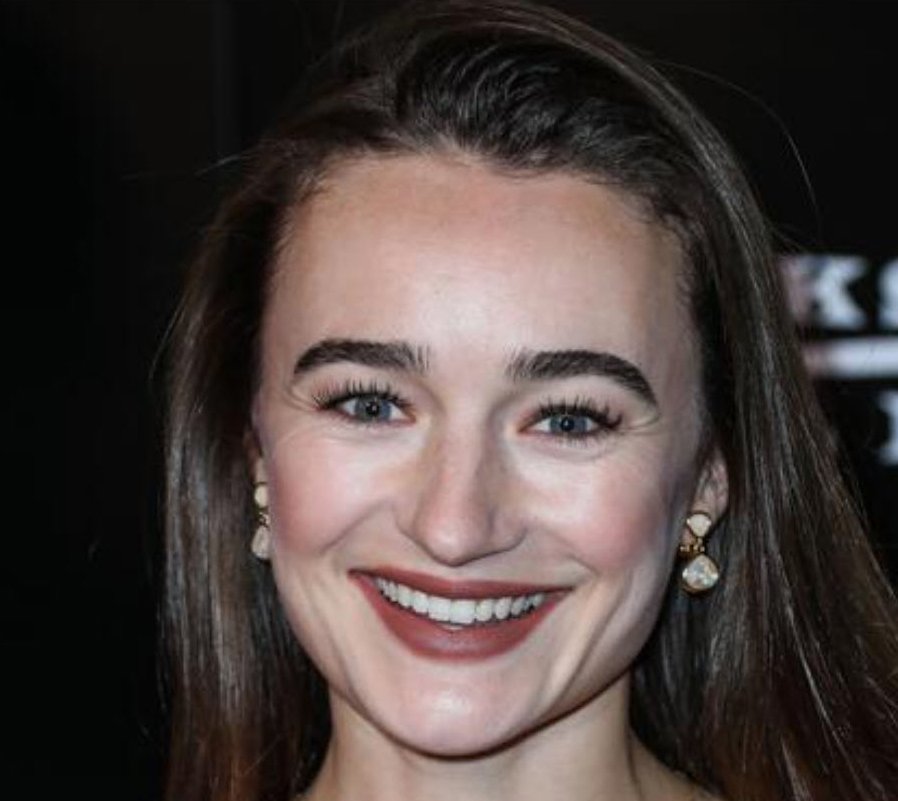
Remembering Kelley Mack: The Walking Dead Actress Passes Away at 33 After Courageous Battle with Rare Brain Cancer
The entertainment industry is mourning the loss of a vibrant talent as news confirms the passing of Kelley Mack, an American actress best known for her roles in the AMC hit series The Walking Dead and the NBC procedural drama Chicago Med. Mack, who was 33 years old, died on August 2, 2025, following a significant and public battle with an aggressive form of brain cancer known as diffuse midline glioma. Her death was confirmed by her family and representatives, sparking a wave of tributes from fans, colleagues, and the wider Hollywood community who admired her versatility as a performer and her unwavering resilience in the face of a devastating diagnosis.
Born Kelley Lynne Klebenow on July 10, 1992, in Cincinnati, Ohio, the actress had built a prolific career that spanned television, film, and commercial production. Her journey in the performing arts began long before she reached the national stage, rooted in a deep-seated passion for storytelling that eventually led her to pursue formal training at Chapman University. Throughout her decade-plus career, Mack became known for her ability to inhabit complex, often vulnerable characters, earning respect for her professionalism on set and her creative contributions as both a producer and an actress. Her passing marks the end of a promising career that was still reaching new heights at the time of her diagnosis.
The announcement of her passing was shared through a heartfelt statement on her official social media channels and a dedicated CaringBridge page, where she had been documenting her health journey for months. Her sister, Kathryn Klebenow, described Kelley as a “bright, fervent light” who transitioned peacefully while surrounded by her mother, Kristen, and her aunt, Karen. The family’s message highlighted Kelley’s connection to nature and her wish to be remembered for her warmth and creativity, rather than just the illness that took her life. As memorials are planned in her hometown of Cincinnati and in Los Angeles, the industry reflects on a legacy defined by artistic integrity and personal strength.
Mack’s career trajectory was marked by a steady rise through the ranks of independent film and mainstream television. She first gained significant attention in the television industry when she was cast as Addy in the ninth season of The Walking Dead. Her character was part of the Hilltop community, appearing during a pivotal era of the show’s long-running narrative. Portraying a teenager navigating the perils of a post-apocalyptic world, Mack brought a sense of grounded humanity to the role, making a lasting impression on the series’ massive global fanbase. Her performance in the “Whisperer War” story arc demonstrated her capability to handle the intense emotional and physical demands of a high-profile genre production.
Beyond the world of zombies and survival, Mack was a recurring presence in several other major network productions. She played a significant role as Penelope Jacobs in the eighth season of the medical drama Chicago Med, where she showcased her dramatic range in a series of emotionally charged episodes. Additionally, she appeared in the FOX procedural 9-1-1, further solidifying her status as a reliable and talented character actress in the Los Angeles television circuit. Her film credits were equally diverse, including a leading role in the thriller Broadcast Signal Intrusion, which premiered at the SXSW Film Festival and received critical acclaim for its atmosphere and performances. In that film, she played Alice, a mysterious character who becomes central to a grieving video archivist’s descent into a world of pirate broadcasts and conspiracy theories.
In addition to her on-screen work, Kelley Mack was a multifaceted creator who was deeply involved in the production side of the industry. She held several credits as a producer, notably for the short film The Long Way and her upcoming project Universal, in which she also starred. Her peers often noted that her understanding of the entire filmmaking process—from script development to post-production—made her an invaluable collaborator on set. This holistic approach to her craft allowed her to navigate the competitive Hollywood landscape with a unique perspective, often choosing projects that challenged social norms or explored the deeper psychological aspects of the human condition.
The health challenges that eventually led to her passing began to surface in late 2024. In January 2025, Mack took the brave step of publicly revealing her diagnosis of diffuse midline glioma (DMG), a rare and particularly aggressive form of central nervous system cancer. In a detailed post shared with her followers, she described the early symptoms that led to her seeking medical attention. It began with persistent lower back pain that she initially attributed to a slipped disc following a move to a new apartment. However, when the pain was accompanied by an unusual “neuropathic itching” in her leg and eventually difficulty walking, she sought emergency care.
An MRI scan revealed an abnormal mass located along her spinal cord, which was later confirmed to be a glioma. Diffuse midline gliomas are notorious in the medical field for their difficulty to treat because of their location in the “midline” structures of the brain and spinal cord, which control critical bodily functions. Unlike some other types of tumors that can be surgically removed, DMGs are often invasive, weaving through healthy tissue in a way that makes complete resection nearly impossible. Mack’s diagnosis was a shock to those who knew her as a healthy, active young woman, yet she met the news with a characteristic determination to fight and to educate others about the disease.
Following her diagnosis, Mack underwent several rounds of intensive treatment, including proton radiation therapy and specialized chemotherapy. She documented these experiences with remarkable candor, sharing photos of her “radiation mask” and discussing the physical and mental toll of the treatments. Despite the severity of her condition, Mack’s representative recently revealed that the actress remained optimistic and continued to audition for new roles as late as June 2025. This dedication to her craft during her illness served as an inspiration to her fellow actors, demonstrating a profound love for the arts that transcended her physical limitations.
To understand the gravity of the battle Kelley Mack faced, it is essential to look at the clinical nature of diffuse midline glioma. According to the National Cancer Institute, this type of cancer is a high-grade tumor that primarily affects the brain and spinal cord. It is most frequently diagnosed in children, making its appearance in a 32-year-old adult relatively rare. The disease is characterized by a specific genetic mutation, often the H3 K27M mutation, which alters the way DNA is packaged in the cell, leading to rapid and uncontrolled cell growth. Because these tumors are located in the brainstem or spinal cord, they can interfere with vital functions like breathing, heart rate, and motor control.
The medical community continues to struggle with effective long-term treatments for DMG. Standard care usually involves radiation to shrink the tumor and manage symptoms, but the recurrence rate is high. In recent years, research has shifted toward targeted therapies and immunotherapies that attempt to bypass the blood-brain barrier and address the specific genetic mutations driving the cancer. Mack’s transparency about her treatment journey helped bring much-needed attention to the lack of funding and research for rare adult gliomas, a cause that many of her supporters have vowed to continue in her memory.
The symptoms of this condition can be diverse and vary significantly depending on where the tumor is located along the midline. For those who followed Kelley’s updates, the progression of her symptoms offered a sobering look at how neurological cancers impact daily life. To provide a clearer understanding of the warning signs associated with this disease, medical experts often highlight the following indicators:
- Progressive Weakness and Numbness: Patients often notice a gradual loss of strength in their limbs or a persistent tingling sensation that does not resolve with rest. In Kelley’s case, this manifested as shooting pains and a loss of mobility that eventually required medical intervention.
- Changes in Vision and Coordination: Because midline tumors can affect the cranial nerves, double vision (diplopia) and a sudden loss of balance (ataxia) are common early warning signs. These symptoms occur when the tumor puts pressure on the areas of the brain responsible for processing sensory information.
- Difficulty Swallowing or Speaking: Tumors located in the brainstem can interfere with the nerves that control the muscles of the throat and face. This can lead to dysphagia (trouble swallowing) or changes in the tone and clarity of the voice.
- Intense Neuropathic Itching: A less common but highly specific symptom is itching that feels like it is “under the skin” and cannot be relieved by scratching. This is caused by the tumor irritating the nerves at the source, sending false signals to the brain.
- Increased Intracranial Pressure: As the tumor grows, it can block the flow of cerebrospinal fluid, leading to headaches that are typically worse in the morning, nausea, and vomiting. These symptoms are often the primary reason adults seek emergency imaging.
- Behavioral and Cognitive Shifts: Some patients and their families report subtle changes in personality, memory, or the ability to concentrate. These changes can be easy to overlook but are significant markers of neurological distress.
Throughout the spring and summer of 2025, the outpouring of support for Mack was immense. A GoFundMe campaign and various fundraisers were organized to assist with her mounting medical expenses and to support her family during the transition. Her presence on the CaringBridge platform became a central hub for updates, where she frequently expressed gratitude for the “army of supporters” that stood by her. She often shared small victories, such as finishing a round of radiation or spending time in nature, which she found to be a vital source of peace during her treatment.
The “butterfly” motif that her family mentioned in her obituary has become a symbol of her legacy among fans. According to her sister, Kelley had a deep connection to the idea of transformation and beauty in the face of struggle. In the days following her passing, many friends and colleagues shared stories of seeing butterflies at unexpected moments, interpreting them as a sign of her enduring spirit. This narrative has helped provide a sense of comfort to a community that has found it difficult to process the loss of someone so young and full of potential.
Tributes from the cast and crew of The Walking Dead have flooded social media, with many recalling Mack as a kind and professional presence on the Georgia sets. Showrunners and fellow actors noted that even in a show centered around death and loss, the real-life passing of a cast member is a profound tragedy that affects the entire “TWD Family.” Her role as Addy may have been a supporting one, but her impact on the narrative and the people she worked with was clearly substantial. Similarly, the team at Chicago Med released statements praising her dedication to her role and her ability to bring a sense of realism to the medical cases portrayed on the show.
Kelley’s influence extended beyond her acting roles. She was a notable figure in the commercial world, appearing in high-profile campaigns for brands like Dr. Pepper, Ross, and Chick-fil-a. Most recently, she was featured in a Rakuten commercial alongside her mother, Kristen, a project that her family says she cherished for the opportunity it gave her to work with her mom. These commercial appearances made her a familiar face to millions of viewers, even those who may not have followed her more dramatic television work. Her ability to pivot between lighthearted commercial spots and intense dramatic performances was a testament to her versatility as a performer.
The academic and local community in Ohio also feels the loss deeply. Having graduated from Hinsdale Central High School and later finding success on the West Coast, Mack was often cited as an inspiration for aspiring actors in her hometown. Her journey from a local high school theater student to a recognized television actress in Los Angeles was a roadmap for many young artists. The Glendale Lyceum in Ohio, where her memorial service was held on August 16, saw a massive turnout of childhood friends, teachers, and family members who gathered to celebrate her life and the many milestones she achieved in her 33 years.
As the industry moves forward, Mack’s final project, Universal, stands as a poignant reminder of her talent. The film, which she executive produced and starred in, is scheduled for a posthumous release. Colleagues who worked on the project have stated that Mack’s performance in the film is some of her best work, capturing a depth of emotion that reflected her personal growth as an artist. There are plans to dedicate the film to her memory, ensuring that her final creative endeavor serves as a lasting tribute to her career.
In addition to her film and television work, Mack was an advocate for the arts and for the empowerment of women in film. She often spoke in interviews about the importance of female voices in production and the need for more diverse storytelling in the horror and thriller genres. Her production company was focused on developing projects that provided opportunities for emerging talent, a mission that her partners hope to continue in her honor. By investing her time and resources into producing, Mack was building a foundation that would have allowed her to shape the industry from the inside out.
Her family has requested that in lieu of flowers, donations be made to organizations dedicated to glioma research and support for families dealing with terminal illness. They hope that Kelley’s story will encourage more people to listen to their bodies and advocate for their health when something feels wrong. The “persistent back pain” that Kelley initially ignored is a common symptom of many conditions, but her experience highlights the importance of thorough medical investigation when symptoms persist or worsen.
The loss of Kelley Mack is not just a loss for her family and friends, but for an industry that values authenticity and hard work. In an era where celebrity culture often feels disconnected from reality, Mack’s willingness to share the raw, unvarnished truth of her cancer battle created a genuine connection with her audience. She did not shy away from the difficult parts of her journey, and in doing so, she provided a voice for many others who are fighting similar battles in silence.
The medical team that treated Mack at the University of Miami Health System and Jackson Memorial Hospital emphasized the courage she showed throughout her treatment. Specialists there noted that despite the poor prognosis associated with DMG, patients like Kelley play a crucial role in the advancement of medicine by participating in clinical trials and sharing their data with researchers. Every case provides more information that could eventually lead to a breakthrough in how these tumors are managed. While the medical community mourns the loss of a patient, they also celebrate the contribution she made to the collective understanding of this complex disease.
As the “TWD Family” and the fans of her other works continue to process this loss, there is a collective effort to keep her memory alive through the celebration of her work. Fan conventions and online communities have organized watch parties of her episodes, sharing favorite moments and lines of dialogue. These digital memorials serve as a testament to the power of television to connect people and the lasting impact an actor can have on the lives of strangers across the globe. Kelley Mack’s work will continue to reach new audiences as her series remain in syndication and on streaming platforms, ensuring that her talent is not forgotten.
The final months of Kelley’s life were spent in her hometown of Cincinnati, a choice she made to be closer to her core support system. The comfort of family and the familiarity of her childhood home provided a sanctuary during her most difficult days. Her parents, Kristen and Lindsay, along with her brother Parker and sister Kathryn, remained by her side, embodying the “steadfast” support that she often praised in her writing. This return to her roots was a full-circle moment for the actress, finding peace in the place where her dreams of acting first began.
In conclusion, the passing of Kelley Mack at the age of 33 is a tragedy that has touched many lives across the entertainment landscape and beyond. From her breakout role as Addy in The Walking Dead to her compelling performances in Chicago Med and Broadcast Signal Intrusion, she proved herself to be a dedicated and versatile artist. Her battle with diffuse midline glioma was marked by a level of transparency and bravery that offered hope and awareness to many others facing similar diagnoses. As the industry prepares for the posthumous release of her final projects and her family continues to advocate for cancer research in her name, Kelley Mack’s legacy remains one of light, creativity, and incredible strength. She will be remembered not only for the characters she brought to life on screen but for the grace and resilience she displayed in her final chapter. Her story serves as a powerful reminder of the fragility of life and the enduring impact of a spirit that refuses to be dimmed, even in the face of the greatest challenges.
Recommended For You