
Australian Shepherd Dog Breed: Complete Guide to Temperament, Training, Health, and Care for Aussie Owners

The Australian Shepherd has captured the hearts of dog lovers worldwide with its striking appearance, remarkable intelligence, and boundless energy. Despite what the name suggests, this versatile herding breed was actually developed in the United States during the 19th century. These medium-sized dogs have become one of the most popular breeds in America, prized for their loyalty, trainability, and adaptability to various roles from ranch work to family companionship. Understanding the unique characteristics and requirements of Australian Shepherds is essential for anyone considering adding one of these dynamic dogs to their family or seeking to provide the best care for their current Aussie.
Australian Shepherds are far more than just beautiful dogs with mesmerizing coat patterns and captivating eyes. They are highly intelligent working dogs with specific needs that must be met for them to thrive. Their herding heritage has shaped every aspect of their personality, from their intense focus and problem-solving abilities to their need for constant mental and physical stimulation. These dogs form deep bonds with their families and are known for their protective nature, making them excellent watchdogs while remaining affectionate companions. However, prospective owners must understand that this breed demands significant time, energy, and commitment to training and exercise.
Origins and History of the Australian Shepherd Breed
The history of the Australian Shepherd is surprisingly complex and somewhat misleading given the breed’s name. These dogs are not actually from Australia but were developed in the western United States during the late 1800s and early 1900s. The breed’s ancestors can be traced back to the Pyrenean Shepherd dogs from the mountainous region between Spain and France, brought to America by Basque shepherds who had worked in Australia before immigrating to the United States. These shepherds brought their herding dogs with them, and it is believed that these dogs were crossed with various Collie types and other herding breeds already present in America.
The name Australian Shepherd likely originated from the association with the Basque shepherds who came from Australia, or from the Australian Merino sheep that were imported to California along with their herding dogs. During their development in the American West, these dogs were selectively bred for their exceptional herding abilities, intelligence, and adaptability to the harsh and varied climates of western ranches. They quickly became indispensable to cowboys and ranchers who needed capable dogs to manage livestock across vast, rugged terrain.
Rise to Popularity in America
After World War II, Australian Shepherds experienced a surge in popularity when they began appearing in rodeos, Western movies, and television shows. Their impressive tricks, agility, and striking appearance captivated audiences nationwide. The breed’s versatility became increasingly apparent as they excelled not only in herding but also in various dog sports and service roles. Despite their long history as working dogs, the American Kennel Club did not officially recognize the Australian Shepherd until 1991, though breed clubs and enthusiasts had been promoting and preserving the breed for decades prior.
Development as a Working Breed
The Australian Shepherd was specifically bred to be a versatile ranch dog capable of handling multiple responsibilities. Unlike breeds developed for a single purpose, Aussies needed to be adaptable problem-solvers who could work independently when necessary while remaining responsive to their handler’s commands. This dual requirement created a breed with exceptional intelligence and a strong desire to please their owners. Their herding style is characterized by an intense, focused stare often called the Aussie eye or death stare, which they use to control livestock movement without physical contact.
The breed’s development occurred primarily on ranches in California and other western states, where they were tasked with herding sheep, cattle, and even poultry. The demanding work required dogs with stamina, agility, and weather-resistant coats that could withstand the varied climates of the American West. Ranchers selectively bred dogs that demonstrated superior herding instincts, intelligence, and physical soundness, creating the foundation for the modern Australian Shepherd we know today.
Physical Characteristics and Appearance
Australian Shepherds are medium-sized dogs with a well-balanced, athletic build designed for endurance and agility. Males typically stand between 20 and 23 inches tall at the shoulder and weigh between 50 and 65 pounds, while females are slightly smaller at 18 to 21 inches tall and weighing 40 to 55 pounds. Their body is slightly longer than tall, creating a rectangular profile rather than square. This proportioning contributes to their characteristic fluid, ground-covering movement and ability to make quick turns and sudden stops while herding.
Coat Colors and Patterns
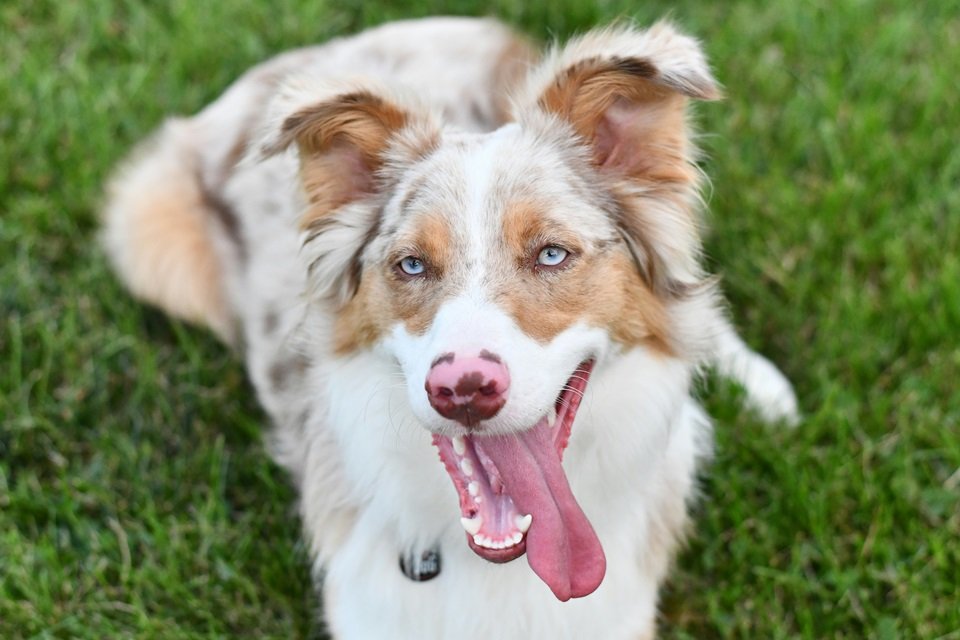
One of the most distinctive features of Australian Shepherds is their stunning coat coloration. The breed standard recognizes four primary color variations including black, red, blue merle, and red merle. The merle pattern creates a marbled or mottled appearance with irregular patches of diluted color mixed with the base color. Many Australian Shepherds also display white markings on the face, chest, legs, and underside, along with tan or copper points on the face, legs, and under the tail. The variety in coat patterns means that virtually no two Australian Shepherds look exactly alike, adding to the breed’s visual appeal.
The double coat of the Australian Shepherd consists of a weather-resistant outer layer and a dense undercoat that provides insulation in both hot and cold weather. The coat is medium in length and can be either straight or slightly wavy. The texture is somewhat coarse on the outer coat, helping to repel water and dirt. Feathering is prominent on the back of the legs and the tail, giving the breed its characteristic fluffy appearance in these areas. The coat requires regular maintenance to prevent matting and to manage shedding, particularly during seasonal coat changes in spring and fall.
Eye Color and Heterochromia
Australian Shepherds are renowned for their expressive, intelligent eyes that can be brown, blue, amber, hazel, or any combination thereof. One of the breed’s most striking features is the frequent occurrence of heterochromia, a condition where each eye is a different color, or where a single eye contains two different colors. This trait is particularly common in merle-colored dogs and was so distinctive that Native Americans reportedly called these dogs ghost eye dogs and considered them sacred. The alert, attentive expression combined with their unique eye colors makes the Australian Shepherd instantly recognizable and adds to their captivating appearance.
Tail Characteristics
Historically, Australian Shepherds had their tails docked shortly after birth as a practical measure for working dogs to prevent injury while herding in rough terrain and thick brush. However, many Australian Shepherds are now born with naturally short tails or bobtails due to selective breeding over generations. This genetic trait, known as natural bobtail, results in tails ranging from a few inches to nearly full length. Modern breeding practices have increasingly favored natural bobtails, and tail docking is becoming less common and is even banned in many countries as an inhumane practice.
Temperament and Personality Traits
The Australian Shepherd temperament is characterized by high intelligence, intense energy, and unwavering loyalty to their family. These dogs are natural problem-solvers who thrive on mental challenges and new learning opportunities. Their herding background has instilled a strong work ethic and desire to have a job to do, which can manifest in various ways from organized work tasks to self-assigned duties like patrolling the yard or keeping track of family members. Aussies are known for being attentive and highly responsive to their owner’s moods and commands, often seeming to anticipate what their person wants before being asked.
While Australian Shepherds are generally friendly and affectionate with their families, they can be reserved or cautious around strangers. This trait stems from their guardian instincts developed as ranch dogs responsible for protecting livestock and property. However, with proper socialization from puppyhood, most Aussies learn to welcome new people appropriately while maintaining their natural watchdog abilities. They tend to form particularly strong bonds with one or two family members, though they remain affectionate and loyal to the entire household. Their protective nature means they take their role as family guardians seriously, making them excellent watchdogs who will alert their owners to anything unusual.
Intelligence and Trainability
Australian Shepherds consistently rank among the most intelligent dog breeds, often appearing in the top tier alongside Border Collies and Poodles. Their intelligence manifests in rapid learning, excellent problem-solving abilities, and remarkable memory for commands and routines. This cognitive capacity makes them highly trainable and capable of learning complex command sequences and behaviors. However, their intelligence also means they can become bored with repetitive training methods and may attempt to add their own variations to activities, which can be problematic if not properly channeled through positive reinforcement training techniques.
The breed’s eagerness to please combined with their intelligence creates an ideal foundation for training, but it also means that Aussies require owners who can provide consistent leadership and mental stimulation. They excel in virtually every dog sport and activity including obedience, agility, flyball, dock diving, herding trials, and even search and rescue work. Many Australian Shepherds also serve successfully as therapy dogs, service dogs, and working dogs in various professional capacities. Their trainability extends beyond formal activities to everyday household management, making them relatively easy to house train and teach good manners when owners invest the necessary time and effort.
Energy Levels and Exercise Requirements
Australian Shepherds are perpetual motion machines with energy levels that can seem inexhaustible. These dogs were bred to work all day on ranches, covering miles of terrain while herding livestock, and they retain that stamina today. An under-exercised Australian Shepherd is likely to develop behavioral problems including destructive chewing, excessive barking, and compulsive behaviors. Owners must be prepared to provide at minimum one to two hours of vigorous physical exercise daily, though many Aussies can happily engage in even more activity without showing signs of fatigue.
Physical exercise alone is not sufficient for this breed. Australian Shepherds require substantial mental stimulation to remain happy and well-adjusted. Puzzle toys, training sessions, interactive games, and activities that engage their problem-solving abilities are essential components of caring for an Aussie. Many owners find that mental exercise can be just as tiring for their dog as physical activity. Activities like nose work, advanced obedience training, and learning new tricks provide the cognitive challenges that Australian Shepherds crave. Without adequate mental stimulation, even a physically tired Aussie may still exhibit restless or destructive behavior.
Herding Instincts in Modern Life
The herding instinct remains strong in Australian Shepherds even when they have never seen livestock. This instinct can manifest in various ways in a family setting, including attempts to herd children, other pets, or even adults by nipping at heels or circling them. While this behavior is natural and not aggressive, it can be problematic and even dangerous, particularly around small children who might be frightened or knocked over. Owners must provide appropriate outlets for these instincts through structured activities and training while teaching their Aussie which behaviors are acceptable in a home environment.
Many Australian Shepherd owners find that participating in herding classes or trials provides an excellent outlet for their dog’s natural instincts while strengthening the human-canine bond. Even Aussies who never work with actual livestock benefit from the mental and physical challenges of herding training. For those unable to access herding opportunities, other activities that require focus, control, and working in partnership with the handler, such as agility or rally obedience, can help satisfy the breed’s need to work and use their natural abilities.
Training Your Australian Shepherd
Training an Australian Shepherd should begin from the moment they enter your home, whether as a puppy or an adult. Early socialization is absolutely critical for this breed to prevent the development of behavioral issues stemming from their natural wariness of strangers and strong protective instincts. The prime socialization window occurs between 7 weeks and 4 months of age, during which puppies should be exposed to a wide variety of people, animals, environments, sounds, and experiences in positive, controlled ways. This early exposure helps build confidence and teaches young Aussies to approach new situations with curiosity rather than fear or suspicion.
Positive Reinforcement Methods
Australian Shepherds respond exceptionally well to positive reinforcement training methods that reward desired behaviors with treats, praise, play, or other motivators. These sensitive dogs can become anxious or shut down if trained with harsh corrections or punishment-based methods. Instead, focusing on rewarding good behavior and redirecting unwanted behavior creates a confident, happy dog who is eager to learn and work with their handler. Consistency is crucial when training an Aussie, as they are quick to notice and exploit inconsistencies in rules or expectations.
Given their intelligence, Australian Shepherds benefit from varied training sessions that prevent boredom. Short, frequent training periods of 10 to 15 minutes several times daily are more effective than longer sessions that might lose the dog’s interest. Incorporating training into daily life through activities like practicing commands during walks or using meal portions for training rewards helps keep the Aussie engaged and reinforces learning. It is important to end training sessions on a positive note with a behavior the dog performs well, maintaining their enthusiasm for future training.
Addressing Common Behavioral Challenges
Australian Shepherds can develop behavioral issues if their needs for exercise, mental stimulation, and structured activity are not met. Common problems include excessive barking, destructive chewing, digging, and attention-seeking behaviors. These issues typically stem from boredom, insufficient exercise, or lack of mental stimulation rather than any inherent behavioral flaw. Addressing the root cause by increasing exercise, providing puzzle toys, and ensuring the dog has appropriate outlets for their energy usually resolves these problems more effectively than attempting to suppress the behaviors directly.
Another common challenge is managing the herding instinct in inappropriate contexts. Teaching a reliable leave it command and providing alternative behaviors when the dog feels the urge to herd can help control this natural tendency. Some Australian Shepherds also exhibit obsessive-compulsive behaviors such as compulsive chasing of light reflections or shadows, particularly when under-stimulated. These behaviors require patient redirection and ensuring the dog receives adequate physical and mental exercise to reduce stress and anxiety that may contribute to compulsive behaviors.
Health Issues and Veterinary Care
While Australian Shepherds are generally a healthy breed with an average lifespan of 12 to 15 years, they are predisposed to certain genetic health conditions that prospective owners should understand. Responsible breeding practices including health screening of breeding dogs have helped reduce the incidence of some conditions, but vigilant owners should remain aware of potential health issues and work closely with their veterinarian to maintain their Aussie’s health throughout their life.
Hip and Elbow Dysplasia
Hip dysplasia is one of the most common orthopedic issues affecting Australian Shepherds. This genetic condition occurs when the hip joint does not develop properly, causing the ball and socket to fit together incorrectly. Over time, this malformation leads to degenerative joint disease, arthritis, pain, and lameness. While hip dysplasia has a genetic component, environmental factors including rapid growth, excessive exercise during puppyhood, and obesity can exacerbate the condition. Responsible breeders screen their breeding dogs through radiographic evaluation and only breed animals with good hip scores to reduce the incidence of this painful condition.
Elbow dysplasia is another orthopedic condition that may be underdiagnosed in Australian Shepherds but is increasingly recognized as a significant health concern in the breed. Similar to hip dysplasia, elbow dysplasia involves improper development of the elbow joint, leading to pain, lameness, and arthritis. Affected dogs may show only occasional lameness or, in some cases, no obvious symptoms while still experiencing joint deterioration. Both hip and elbow dysplasia can be managed through weight control, appropriate exercise, joint supplements, physical therapy, pain management, and in severe cases, surgical intervention.
Eye Conditions
Eye problems are particularly prevalent in Australian Shepherds, with several hereditary conditions affecting the breed. Cataracts are among the most common, causing cloudiness of the lens that can progress to complete opacity and vision loss. While cataracts can occur at any age in Aussies, they most commonly develop in mature adults. Hereditary cataracts are bilateral, meaning they affect both eyes, though not necessarily simultaneously. Surgical removal of cataracts is possible and often restores vision, though not all cataracts require surgery if the dog adapts well to partial vision loss.
Progressive Retinal Atrophy is an inherited disease causing gradual degeneration of the retina, eventually leading to blindness. The condition typically begins with night blindness before progressing to complete vision loss. Unfortunately, there is no cure for PRA, though most dogs adapt remarkably well to vision loss when it occurs gradually. Other eye conditions seen in Australian Shepherds include coloboma, an eye malformation present from birth, and Collie Eye Anomaly, a hereditary condition affecting the retina and sclera that can range from mild to severe. Reputable breeders screen their breeding stock through veterinary ophthalmologists to reduce the incidence of these conditions.
MDR1 Gene Mutation
The MDR1 gene mutation is a serious health concern in Australian Shepherds and other herding breeds. This genetic defect affects the blood-brain barrier, making dogs extremely sensitive to certain commonly used medications including ivermectin, a drug used in heartworm preventatives and parasite treatments. Dogs with the MDR1 mutation can have severe, potentially fatal reactions to these medications. Research indicates that over 50 percent of Australian Shepherds carry at least one copy of the mutated gene, making awareness of this condition critical for owners and veterinarians.
A simple cheek swab test can determine if a dog carries the MDR1 mutation. Dogs can be normal, carriers with one copy of the mutation, or affected with two copies. Affected dogs should never receive medications known to cause reactions, and carriers should be treated with caution. Veterinarians who are aware of a dog’s MDR1 status can select safe alternative medications and avoid potentially fatal drug reactions. This is one reason why it is essential to inform all veterinary professionals treating your Australian Shepherd of their MDR1 status and to keep this information prominently in their medical records.
Other Health Concerns
Autoimmune thyroiditis is the most commonly reported autoimmune disease in Australian Shepherds. This condition causes the immune system to attack the thyroid gland, leading to hypothyroidism where insufficient thyroid hormone is produced. Symptoms include weight gain, lethargy, skin problems, and heat-seeking behavior. Fortunately, hypothyroidism is easily managed with daily medication that is relatively inexpensive. Regular thyroid testing is recommended for Australian Shepherds, particularly if they exhibit symptoms consistent with thyroid disease.
Cancer affects Australian Shepherds at rates similar to other breeds, but they show increased susceptibility to specific types including lymphoma and hemangiosarcoma. Lymphoma is a cancer of the lymphatic system that can affect lymph nodes and organs throughout the body. It is one of the more treatable cancers in dogs, with many patients responding well to chemotherapy. Hemangiosarcoma is a more aggressive cancer affecting blood vessel cells, most commonly presenting as tumors in the spleen or liver that can cause internal bleeding. Unfortunately, hemangiosarcoma has a poor prognosis even with treatment, with average survival times of six to nine months following surgery and chemotherapy.
Grooming and Coat Care
Australian Shepherds have a medium-length double coat that requires regular grooming to maintain its health and appearance. Weekly brushing sessions are essential to prevent matting, remove loose hair, and distribute natural oils throughout the coat. During spring and fall when Aussies shed their undercoat, daily brushing becomes necessary to manage the significant amount of loose fur and prevent it from accumulating in the home. Using proper grooming tools including a slicker brush, undercoat rake, and metal comb helps effectively remove loose undercoat and prevents tangles from forming.
Bathing and Hygiene
Australian Shepherds typically require bathing every four to six weeks, though active dogs who spend significant time outdoors may need more frequent baths. It is important to thoroughly dry the coat after bathing, paying special attention to the dense undercoat where moisture can become trapped and lead to skin problems. The breed’s weather-resistant double coat should not be shaved, as it provides important insulation from both heat and cold by trapping a layer of air close to the body. Shaving can damage the coat structure and actually reduce the dog’s ability to regulate body temperature.
Regular attention to other grooming needs is essential for overall health. Ears should be checked and cleaned weekly, particularly after bathing or swimming, as moisture trapped in the ear canal can lead to infections. Nails require trimming every few weeks to prevent overgrowth that can cause discomfort and gait problems. Dental care is critical for preventing periodontal disease, which can affect overall health. Daily tooth brushing with dog-safe toothpaste is ideal, though regular dental treats and professional cleanings provide additional support for oral health.
Nutrition and Feeding Guidelines
Australian Shepherds require a high-quality diet that provides appropriate nutrition to support their active lifestyle. The best dog food for Aussies contains high-quality animal protein as the primary ingredient, healthy fats for energy and coat health, complex carbohydrates for sustained energy, and essential vitamins and minerals. Many owners choose foods that meet or exceed the standards set by the Association of American Feed Control Officials to ensure nutritional adequacy. The specific nutritional needs of individual Australian Shepherds vary based on age, activity level, health status, and metabolism.
Life Stage Nutrition
Australian Shepherd puppies have different nutritional requirements than adult dogs and should be fed a high-quality puppy formula designed to support proper growth and development. Puppy food should contain 25 to 30 percent protein and 12 to 16 percent fat to fuel rapid growth and high energy levels. Puppies typically require three to four meals daily until about six months of age, then transition to two to three meals daily. Proper nutrition during the growth phase is particularly important for preventing developmental orthopedic problems, making it crucial not to overfeed puppies or allow them to grow too rapidly.
Adult Australian Shepherds generally do well with two meals daily of a high-quality adult maintenance diet containing approximately 25 percent protein and 12 percent fat. Active or working Aussies may require performance formulas with higher protein and fat content to meet increased energy demands. It is important to monitor body condition and adjust portions as needed to maintain an ideal weight, as obesity contributes to numerous health problems including joint disease. Senior Australian Shepherds, typically those over seven years old, may benefit from senior formulas that support aging joints and slower metabolisms while providing appropriate nutrient levels for older dogs.
Special Dietary Considerations
Some Australian Shepherds develop food allergies or sensitivities that require dietary modifications. Common signs of food allergies include itchy skin, ear infections, gastrointestinal upset, and excessive paw licking. Limited ingredient diets or novel protein sources may help identify and eliminate allergens. Consulting with a veterinarian is important before making significant dietary changes, as proper diagnosis of food allergies requires careful elimination trials. Additionally, Australian Shepherds prone to hip dysplasia or other joint issues may benefit from diets supplemented with glucosamine, chondroitin, and omega-3 fatty acids to support joint health.
Exercise and Activity Requirements
Meeting the exercise needs of an Australian Shepherd is one of the most important responsibilities of ownership. These dogs require substantial daily physical activity to maintain physical health and mental well-being. A minimum of one to two hours of vigorous exercise daily is necessary, though many Aussies can happily engage in even more activity. Appropriate exercises include long walks, jogging, hiking, playing fetch, swimming, and participation in dog sports. Simply having access to a backyard is insufficient, as Australian Shepherds need structured activity and interaction with their owners rather than unsupervised time alone outdoors.
Mental Stimulation Activities
In addition to physical exercise, Australian Shepherds require daily mental stimulation to prevent boredom and behavioral problems. Puzzle toys that dispense treats as the dog solves increasingly difficult challenges provide excellent cognitive exercise. Training sessions teaching new commands or tricks engage the Aussie’s problem-solving abilities while strengthening the bond with their owner. Nose work activities that challenge the dog to use their scenting abilities to locate hidden objects or treats tap into natural canine instincts while providing mental enrichment. Rotating toys and activities prevents habituation and maintains the dog’s interest and engagement.
Dog Sports and Competitions
Australian Shepherds excel in virtually every canine sport and competition, making these activities excellent outlets for their energy and intelligence. Agility training, where dogs navigate obstacle courses at high speed, showcases the breed’s athleticism and trainability. Herding trials allow Aussies to demonstrate their natural instincts in controlled settings with livestock. Obedience competitions, rally, dock diving, flyball, and disc dog competitions all provide appropriate challenges for this versatile breed. Participation in organized dog sports offers structured exercise, mental stimulation, socialization opportunities, and a sense of purpose that working breeds like Australian Shepherds crave.
Living with an Australian Shepherd
Australian Shepherds adapt best to living situations where they can be closely integrated into family life rather than being relegated to outdoor-only living. These dogs thrive on companionship and interaction with their people, becoming anxious, destructive, or developing behavioral problems when left alone for extended periods. While they can adapt to various living situations including apartments when provided with adequate exercise, Aussies are generally better suited to homes with securely fenced yards where they can safely burn energy between structured exercise sessions.
Compatibility with Children and Other Pets
Australian Shepherds can be excellent family dogs for active families with children, though supervision is important, particularly with young children. The breed’s herding instincts may lead them to nip at running children in an attempt to control their movement, behavior that requires management and training. Well-socialized Aussies typically enjoy playing with children and can be gentle and patient, but their high energy and exuberant play style may overwhelm very young or small children. Teaching both dogs and children appropriate interaction and respecting boundaries creates harmonious relationships.
Most Australian Shepherds can live peacefully with other dogs when properly socialized, though some individuals may exhibit same-sex aggression or dominance issues. Early and ongoing socialization with other dogs helps ensure positive relationships. Their herding instinct may extend to other household pets including cats, though many Aussies learn to coexist peacefully with cats when raised together. Small pets like rabbits, guinea pigs, or chickens may trigger strong prey or herding drives, requiring careful management or separation. Each dog is individual, and assessing compatibility with specific animals is important before introducing new pets to a household with an Australian Shepherd.
Choosing an Australian Shepherd
Prospective Australian Shepherd owners must carefully consider whether this breed matches their lifestyle and ability to meet the dog’s needs. Aussies require owners who can commit to substantial daily exercise, mental stimulation, and training. They are not suitable for sedentary individuals, people with limited time for dog care, or those seeking a low-maintenance companion. The ideal Australian Shepherd owner is active, enjoys spending time outdoors, appreciates training and working with their dog, and can provide structure and leadership. Understanding the breed’s requirements before acquiring an Australian Shepherd prevents the disappointment and rehoming that occurs when owners are unprepared for the reality of life with this demanding breed.
Finding a Reputable Breeder
Choosing to purchase an Australian Shepherd puppy requires finding a reputable breeder who prioritizes health, temperament, and breed preservation over profit. Responsible breeders conduct comprehensive health screening on breeding dogs including hip and elbow evaluations, eye examinations by veterinary ophthalmologists, and genetic testing for conditions like MDR1 and hereditary eye diseases. They raise puppies in home environments with extensive socialization, provide health guarantees, and offer lifetime support to puppy buyers. Red flags indicating irresponsible breeding include unwillingness to allow facility visits, inability to provide health clearances, multiple breeds or litters available simultaneously, and pressure to purchase quickly.
Adoption and Rescue Options
Many wonderful Australian Shepherds are available through breed-specific rescues and animal shelters, offering an alternative to purchasing a puppy. Rescued Aussies may be adult dogs, sometimes with known histories and temperaments, allowing potential adopters to select dogs whose personalities match their preferences and lifestyle. Breed rescues typically evaluate dogs in foster homes, providing valuable information about behavior, training needs, and compatibility with children and other pets. While rescued dogs may require patience as they adjust to new homes, many become devoted, grateful companions who thrive when given a second chance.
Pro Tips for Australian Shepherd Owners
- Start training and socialization immediately. The earlier you begin working with your Australian Shepherd, the easier it will be to shape desired behaviors and prevent problems from developing. Even if you adopt an adult dog, implement training and structure from day one to establish clear expectations and build a strong foundation for your relationship.
- Tire the mind before the body. Mental exhaustion can be more effective than physical exercise for managing energy levels. Incorporate training sessions, puzzle toys, and problem-solving activities into your daily routine. A mentally stimulated Aussie is often calmer and better behaved than one who has only received physical exercise.
- Establish a consistent routine. Australian Shepherds thrive on predictability and structure. Consistent meal times, exercise schedules, and training sessions help your dog understand expectations and reduce anxiety. Sudden changes in routine can lead to stress and behavioral issues in sensitive Aussies.
- Provide appropriate outlets for herding instincts. Rather than trying to suppress natural herding behaviors, channel them into acceptable activities. Consider herding classes, agility training, or games that allow controlled expression of these instincts. Teaching solid obedience commands gives you tools to interrupt inappropriate herding behavior when necessary.
- Socialize continuously throughout life. While early socialization is critical, ongoing exposure to new experiences, people, and animals throughout your Aussie’s life helps maintain social skills and confidence. Regular outings to dog-friendly locations, training classes, and varied activities prevent regression and keep your dog well-adjusted.
- Use food puzzles and slow feeders. Making meals more challenging by using puzzle feeders, snuffle mats, or hiding kibble for your dog to find turns eating into mental exercise. This also slows fast eaters and provides enrichment, particularly valuable for dogs who spend time home alone.
- Invest in professional training assistance. Even experienced dog owners benefit from working with professional trainers who understand Australian Shepherds. Group classes provide socialization opportunities while private sessions can address specific behavioral concerns. Quality instruction accelerates training progress and prevents the development of problem behaviors.
- Be patient during adolescence. Australian Shepherds go through a challenging adolescent phase typically between 6 and 18 months when they may seem to forget their training and test boundaries. Consistent, patient reinforcement of rules and commands during this period is essential. The challenging behaviors are temporary, and persistence pays off as the dog matures into a well-mannered adult.
Frequently Asked Questions
Are Australian Shepherds good for first-time dog owners?
Australian Shepherds can be challenging for first-time dog owners due to their high energy, intelligence, and need for extensive training and exercise. They require confident, consistent leadership and significant time commitment. However, motivated first-time owners who research the breed thoroughly, commit to training classes, and can meet the exercise requirements can successfully raise a well-adjusted Aussie. Working with professional trainers and being realistic about the commitment required increases the likelihood of success.
How much do Australian Shepherds shed?
Australian Shepherds are moderate to heavy shedders, with seasonal increases in shedding during spring and fall when they blow their undercoats. Regular brushing helps manage shedding by removing loose hair before it falls throughout the home. While they are not hypoallergenic, maintaining a consistent grooming routine can significantly reduce the amount of hair in the environment. Prospective owners should be prepared for ongoing hair management as part of living with this breed.
Can Australian Shepherds live in apartments?
While Australian Shepherds can technically live in apartments, it is not ideal and requires exceptional commitment from owners to meet the dog’s exercise and stimulation needs. Apartment living Aussies need multiple daily outings for vigorous exercise, regular trips to dog parks or safe areas for off-leash running, and extensive mental stimulation to prevent boredom and destructive behaviors. Many apartment-dwelling Aussies develop behavioral problems when their needs cannot be adequately met in restricted living spaces. Homes with yard access are strongly preferred for this active breed.
Do Australian Shepherds bark a lot?
Australian Shepherds can be vocal dogs, often barking to alert their owners to unusual sights, sounds, or people. Their watchdog nature and high energy can lead to excessive barking if not properly trained and exercised. However, with consistent training teaching quiet commands and providing adequate mental and physical stimulation, barking can be managed effectively. Bored or under-exercised Aussies are much more likely to develop problem barking behaviors than those whose needs are adequately met.
How long can Australian Shepherds be left alone?
Australian Shepherds should not be left alone for extended periods regularly. While adult Aussies can manage four to six hours alone occasionally, they are companion dogs who thrive on interaction and can develop separation anxiety and destructive behaviors when isolated frequently. Puppies require even more frequent attention and should not be left for more than a few hours. Owners who work full-time should arrange for midday visits, dog walkers, or doggy daycare to ensure their Aussie receives adequate attention, exercise, and bathroom breaks throughout the day.
Are Australian Shepherds aggressive?
Australian Shepherds are not inherently aggressive but can develop problematic behaviors including guarding, reactivity, or fear-based aggression if poorly socialized or trained. Their strong protective instincts and wariness of strangers can escalate to aggression without proper guidance. Early and ongoing socialization, positive training methods, and responsible ownership typically result in friendly, well-adjusted dogs. Any signs of inappropriate aggression should be addressed immediately with professional behavioral assistance to prevent escalation and ensure the safety of people and other animals.
What is the difference between Australian Shepherds and Mini American Shepherds?
Miniature American Shepherds, formerly called Miniature Australian Shepherds, were developed from small Australian Shepherds and are now recognized as a separate breed. The primary difference is size, with Mini Americans standing 14 to 18 inches tall compared to the Australian Shepherd’s 18 to 23 inches. Despite the size difference, Mini Americans share the same herding heritage, intelligence, and energy levels as their larger cousins. Both breeds require similar commitments to exercise, training, and mental stimulation, though smaller size may make Mini Americans more manageable for some owners.
Do Australian Shepherds like water and swimming?
Many Australian Shepherds enjoy water and can be excellent swimmers, though individual preferences vary considerably. Some Aussies enthusiastically leap into any body of water, while others may be hesitant or uninterested. Early positive exposure to water helps build confidence and enjoyment. Swimming provides excellent low-impact exercise particularly beneficial for dogs with joint issues. However, never force a reluctant dog into water, as this can create fear and negative associations. Always supervise water activities and be aware that the dense double coat takes considerable time to dry thoroughly.
Conclusion
The Australian Shepherd is an extraordinary breed that offers unwavering loyalty, remarkable intelligence, and exceptional versatility to owners prepared to meet their substantial needs. These beautiful, energetic dogs excel in virtually any task they undertake, from herding livestock on working ranches to competing in dog sports, serving as therapy or service animals, or being devoted family companions. However, their success and happiness depend entirely on receiving appropriate exercise, mental stimulation, training, and integration into family life. Australian Shepherds are not low-maintenance pets and should never be acquired on impulse or without thorough understanding of the commitment required.
For active individuals and families who can dedicate time to training, exercise, and companionship, Australian Shepherds offer rewards that few other breeds can match. Their eager-to-please attitude, problem-solving abilities, and deep bonds with their people create partnerships that are truly special. They challenge their owners to be better, more active, and more engaged, enriching lives through shared adventures and accomplishments. The breed’s versatility means there is virtually no limit to activities and pursuits that Aussies can learn and enjoy alongside their owners.
Prospective owners must honestly evaluate whether they can provide the lifestyle an Australian Shepherd requires. These dogs deserve homes where they will be valued family members receiving daily exercise, training, and attention rather than being relegated to backyard-only existence. When the match between owner and dog is right, Australian Shepherds prove themselves to be among the most devoted, capable, and rewarding companions available. Their intelligence, athleticism, loyalty, and striking beauty have rightfully earned them a place among America’s most beloved breeds, and they continue to win hearts wherever they go with their enthusiasm for life and work.