
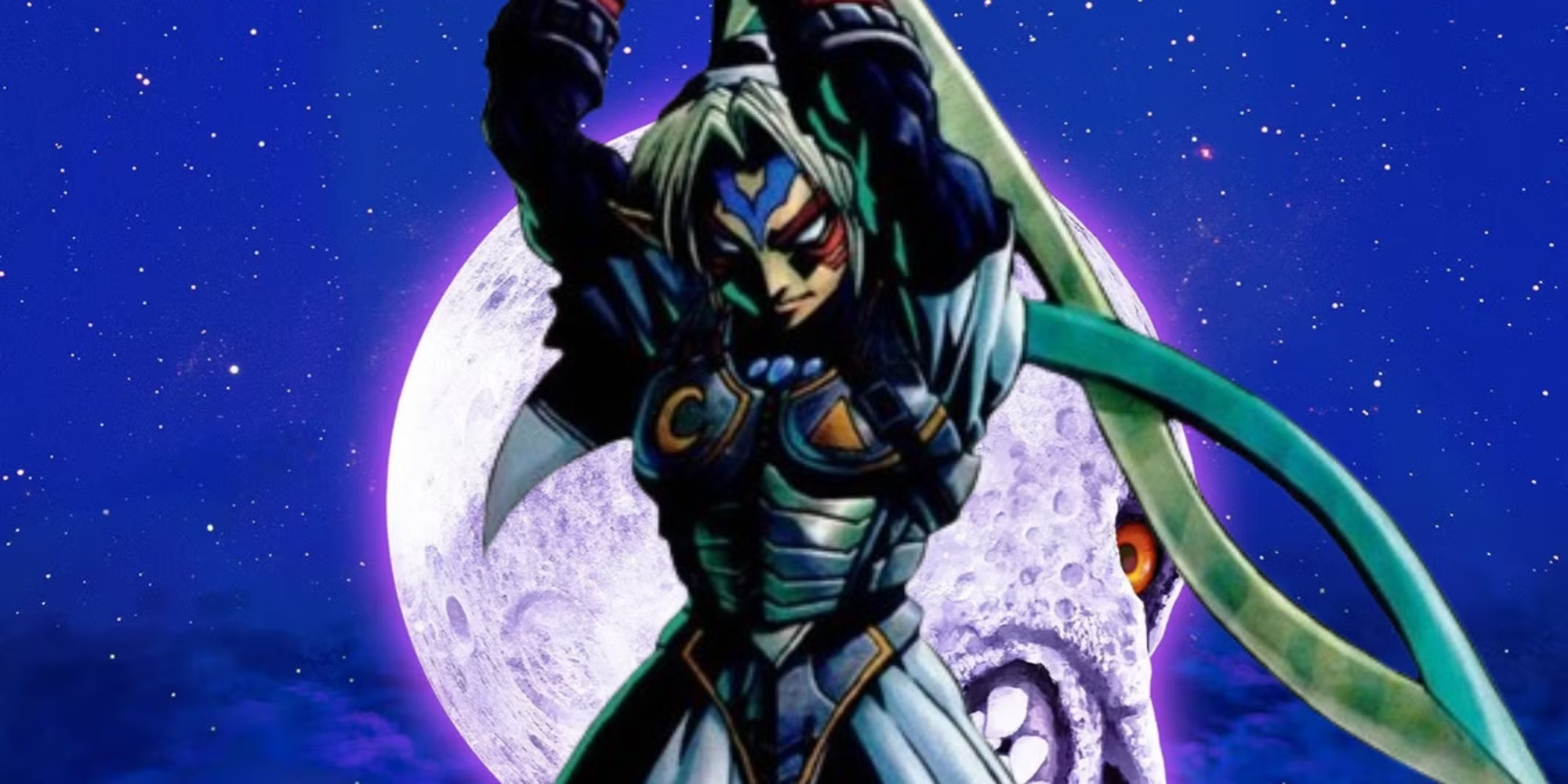

Among the most iconic transformations in gaming history, the Fierce Deity form stands as a symbol of overwhelming power, mystery, and narrative depth. Introduced within a darker chapter of a beloved fantasy franchise, this transformation reshaped how players understood heroism, sacrifice, and balance. Rather than serving as a simple power-up, it represents a culmination of emotional journeys, moral ambiguity, and ancient forces beyond ordinary comprehension.
This guide explores the transformation in a comprehensive, structured manner, examining how it is obtained, what abilities it grants, and why it holds such a unique place in the broader mythos. From gameplay mechanics to symbolic meaning, every aspect is addressed with clarity and depth, offering both longtime fans and new readers a complete understanding.
The focus here is not speculation or theory without grounding, but a careful synthesis of established game mechanics, canonical lore, and developer-intended design elements. The aim is to provide a factual, accessible, and authoritative resource that stands on its own.
Whether you are revisiting the adventure or discovering its deeper layers for the first time, this article serves as a definitive companion to one of the most powerful identities ever associated with the hero.
Origins and Canonical Background
The transformation originates from an ancient artifact known as a mask, forged through the concentrated resolve of benevolent spirits. These spirits represent characters whose unresolved struggles were eased through the hero’s intervention. Their collective gratitude and strength coalesce into a single, formidable essence.
Within the game’s narrative framework, masks are not cosmetic items but vessels of identity and memory. Each mask contains the emotional imprint of its origin, allowing the wearer to channel abilities far beyond normal limits. The Fierce Deity mask is distinct because it does not represent one individual, but many.
This collective origin explains why the transformation feels fundamentally different from others. It is not borrowed strength but entrusted power, activated only when the balance of the world is at its most fragile.
The lore intentionally avoids explicit explanations, reinforcing the sense of awe and restraint. The transformation exists as a last resort, reinforcing the theme that absolute power must be wielded with extreme caution.
How the Fierce Deity Mask Is Obtained
Acquiring the mask requires full completion of character-driven side quests rather than simple combat achievements. Each quest resolves the pain or unfinished business of a non-playable character, reinforcing the game’s emotional core.
The process demands patience, exploration, and empathy. Players must engage with the world’s inhabitants, understand their struggles, and act selflessly. Only by restoring harmony across multiple narratives does the path to this ultimate reward open.
The final exchange occurs in a liminal space, emphasizing that the reward exists outside ordinary progression systems. It is not earned through dominance, but through compassion and perseverance.
Because of this design choice, the transformation feels earned rather than granted, aligning gameplay mechanics with narrative intent.
Abilities and Combat Capabilities
Once activated, the transformation dramatically alters combat dynamics. Strength, speed, and reach are all enhanced to levels unseen elsewhere in the game. Enemies that once required complex strategies become manageable through decisive action.
The defining weapon associated with this form fires energy projectiles with each swing, allowing both close-range and distance-based attacks. This versatility removes many traditional combat limitations.
Defensive resilience also increases significantly, reducing incoming damage and allowing the player to maintain pressure without constant retreat.
Despite these advantages, the transformation is intentionally restricted to specific encounters, ensuring it does not trivialize the entire experience.
Key Combat Advantages
- Enhanced strength output that dramatically shortens boss encounters while preserving cinematic intensity.
- Energy-based sword strikes enabling ranged offense without consuming traditional resources.
- Improved movement speed allowing faster positioning and evasion during complex fights.
- Increased durability that reduces the margin for error without eliminating challenge entirely.
- Simplified combat flow that emphasizes timing and intent rather than inventory management.
- Unique audiovisual feedback reinforcing the sense of wielding forbidden or divine power.
Symbolism and Narrative Meaning
The transformation serves as a narrative counterpoint to the recurring theme of cyclical struggle. Rather than endlessly repeating the same conflict, it represents a potential end point, a force capable of breaking the cycle entirely.
However, the game deliberately restricts its use, suggesting that such an end may come at too great a cost. Absolute resolution risks erasing growth, learning, and the value of individual effort.
The stark visual design, including pale armor and piercing eyes, reinforces its otherworldly nature. It does not look like a natural evolution of the hero, but something imposed from beyond.
This visual and mechanical separation underscores the idea that the form is not meant to replace the hero’s identity, only to serve as a temporary vessel when all other options have been exhausted.
Gameplay Balance and Design Intent
From a design perspective, the transformation is a masterclass in controlled empowerment. By limiting its activation to boss encounters, developers ensure it enhances climactic moments without undermining exploration or puzzle-solving.
The transformation also removes the need for consumable items during its use, streamlining combat while reinforcing its exceptional status.
Importantly, players cannot rely on it for routine challenges. This maintains the core gameplay loop and prevents the experience from becoming monotonous.
The result is a power fantasy that feels earned, impactful, and narratively justified rather than indulgent.
Pro Tips for Using the Fierce Deity Effectively
- Save activation for the most demanding encounters, ensuring the transformation retains its dramatic impact.
- Learn enemy patterns beforehand so the enhanced abilities can be used with precision rather than panic.
- Focus on timing rather than aggression, as efficient strikes often outperform reckless offense.
- Use ranged sword beams strategically to manage positioning in multi-phase battles.
- Avoid overreliance to preserve challenge and maintain mastery of standard mechanics.
Frequently Asked Questions
Is the transformation canon within the series?
Yes, it exists within the official narrative framework of its originating title, though later entries treat it as a unique, self-contained phenomenon.
Can it be used outside of boss encounters?
No, its use is intentionally restricted to preserve game balance and narrative weight.
Does it represent the hero’s true form?
It is better understood as a temporary vessel of collective will rather than an inherent identity.
Why is it so visually distinct?
The design emphasizes its separation from the hero’s natural state, reinforcing its otherworldly origin.
Legacy and Cultural Impact
The transformation has left a lasting imprint on gaming culture, inspiring fan art, analysis, and debate. Its restrained use and ambiguous nature have made it a focal point for discussions about power and responsibility.
It is frequently cited as an example of how mechanical design and storytelling can reinforce each other without excessive exposition.
Subsequent games and adaptations often reference its aesthetic or thematic elements, acknowledging its influence without directly replicating its mechanics.
This enduring relevance speaks to the effectiveness of its original implementation.
Conclusion
The Fierce Deity transformation stands as a rare example of ultimate power handled with narrative restraint and mechanical discipline. Rather than dominating the experience, it enhances key moments, reinforcing themes of sacrifice, unity, and balance.
Through careful design, emotional storytelling, and deliberate limitations, it remains memorable long after the final encounter ends. Its legacy endures not because of raw strength alone, but because of the thoughtful context in which that strength is allowed to exist.